

January 2026
Menopause, Hormones & Heart Health
What does the Evidence Say?
Hormone therapy has become increasingly visible in conversations about menopause.
Not only as a way to ease symptoms, but as a potential tool for long-term disease prevention.
Heart disease in particular often enters the discussion, given that women’s cardiovascular risk rises in midlife.
So it’s understandable that many women are asking: If oestrogen affects the heart, shouldn’t replacing it protect me?
A recent lecture (from Prof Susan Davis, endocrinologist and menopause researcher) exploring menopause, hormones, and cardiovascular health offers a clearer, and more nuanced look at the discussion.
The short version?
Oestrogen matters, but not as a cardiovascular cure
Oestrogen plays an important biological role in metabolism and vascular function in both women and men.
In situations of complete oestrogen deficiency (seen in rare genetic conditions or animal models) we see obesity, insulin resistance, and atherosclerosis.
Even after periods stop, oestrogen continues to be produced through peripheral conversion in fat, bone, and vascular tissue. This makes human menopause very different from the animal models often used in research.
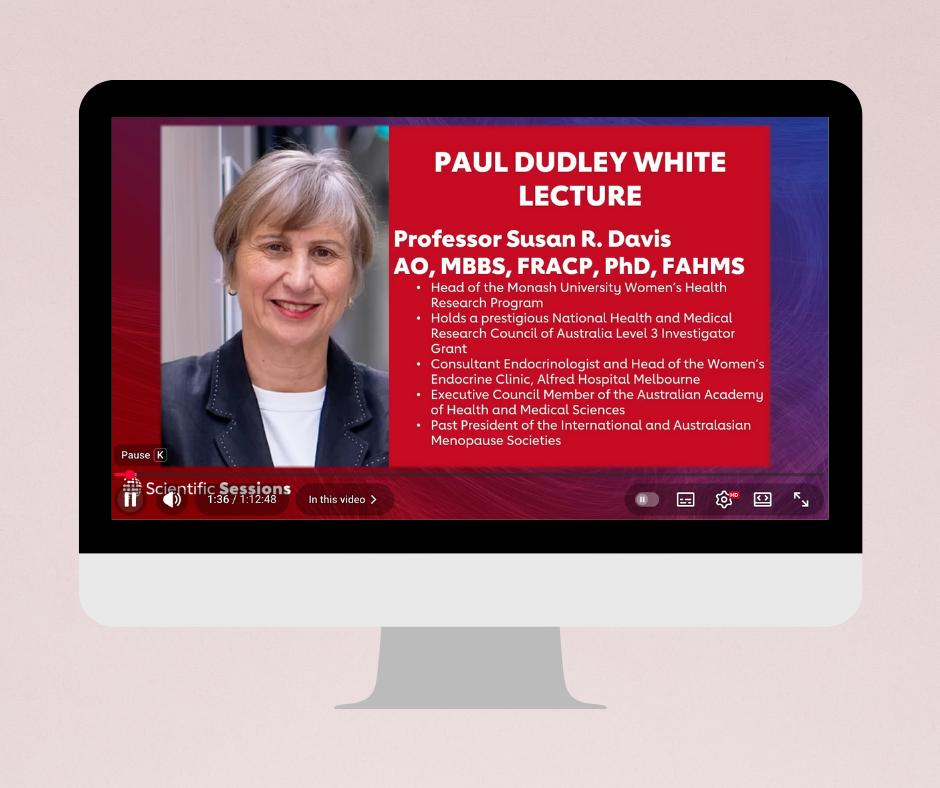
Watch the video from Prof Susan Davis
Or continue reading my summary, below
Hormone therapy does not prevent heart disease
Large, high-quality trials (including the Women’s Health Initiative) consistently show that menopausal hormone therapy does not reduce coronary heart disease or heart attacks.
-
There was no overall cardiovascular benefit
-
There was no harm in women who were younger or closer to menopause
-
Any small improvements in blood sugar were outweighed by factors like body fat and waist circumference
Starting HRT earlier than symptoms begin, doesn't guarantee you an advantage
You may have heard of the 'timing hypothesis'. The idea that oestrogen is heart-protective if started early enough.
The evidence doesn’t support this in a strong enough way for medical guidelines to change (a nuance often lost on social media).
Studies where oestrogen was started within a few years of menopause show:
-
No meaningful reduction in real cardiovascular events
-
At best, small changes in surrogate markers, similar to what lifestyle changes can achieve
Important shifts happen before menopause
This is one of the most important insights from Prof Susan Davis' lecture.
Many of the changes we associate with menopause actually begin during perimenopause, when oestrogen levels can still be relatively high:
-
Weight shifting toward the middle
-
Sleep becoming more fragmented
-
Increasing insulin resistance
-
Early vascular dysfunction
It would be a mistake to wait for symptoms of peri menopause to develop before considering the power of small and influential lifestyle change.
Key takeaway: Women’s cardiovascular risk is shaped long before oestrogen 'drops'.
What does this mean for hormone therapy?
Menopausal hormone therapy:
-
Is the most effective treatment for hot flushes and night sweats
-
Can improve sleep, quality of life, and day-to-day functioning
-
Can be used safely for symptom relief, even in many women with cardiovascular risk
Key takeaway: hormone therapy is for symptom relief and wellbeing, not disease prevention.
The bigger picture
-
Menstrual history
-
Chronic stress and emotional labour
-
Sleep disruption and shift work
-
Mental health
-
Socioeconomic pressures
-
Caregiving roles
Hormones matter, inside a much larger life-course story.
This perspective reflects how I approach midlife health in my work. To support women with evidence, reassurance, and practical ways to feel more resourced in their bodies and lives.

"So what do this mean for me, at midlife?"
Hormone therapy can support comfort and quality of life. And for many women, that matters enormously. But long-term health is also shaped by how supported, regulated, rested, and resourced a woman feels in her life.
This isn’t bad news. It’s grounding.
Clinical principle: Hormone therapy is a symptom-management tool, not a disease-prevention strategy.
Hormone therapy can be a valuable tool for symptom relief, but it is only one part of a much bigger picture.
In my work with women in midlife, I support a whole-system approach that combines evidence-based information with practical, compassionate support for this stage of life.
If you would like to explore that approach further, you can contact me here: info@angiegarton.com
I currently work with women one to one, and in small groups, both online and in person.

If you've not yet joined my online community – Finding Yourself In Menopause - then check out the link below.
We are available to all women, at any stage of their midlife and menopause journey.